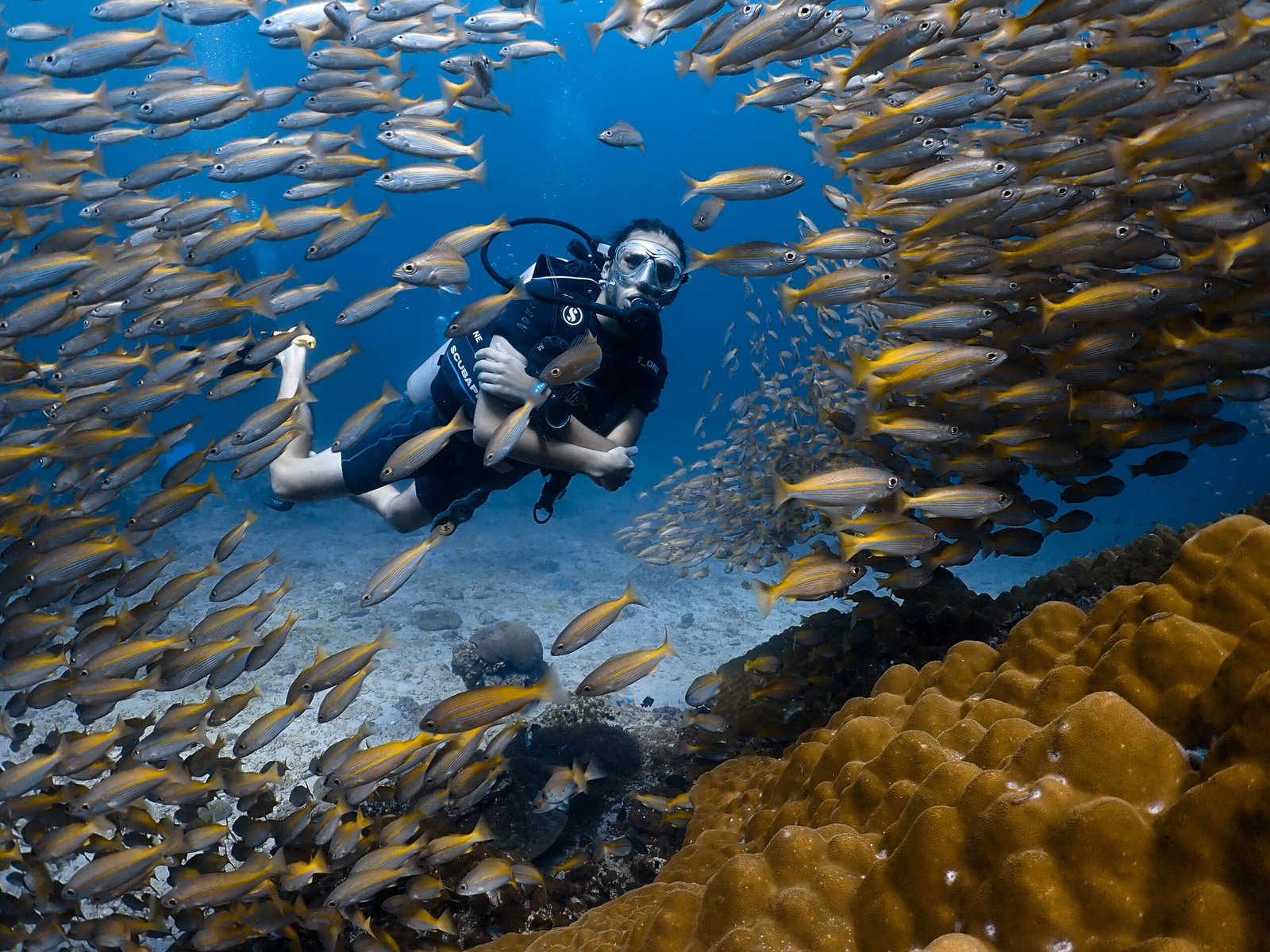
Scuba Diving in Phi Phi Island: A Dive into Adventure and Environmental Stewardship
Welcome to the Pinkwhale Club, your go-to resource for scubadiving and unforgettable adventures! If you’re dreaming of crystal-clear waters, dense, vibrant coral reefs, and a chance to contribute to marine conservation, scuba diving then Phi Phi Island, Thailand, is your way to go! Nestled in the Andaman Sea, the Phi Phi Islands are a diver’s paradise, offering breathtaking, not only! underwater landscapes and a commitment to preserving their delicate ecosystem. In this article, we’ll explore why Phi Phi is a top scuba diving destination, highlight the best dive sites, and spotlight the inspiring environmental efforts making a difference. Whether you’re a beginner or a seasoned diver, this guide will inspire your next underwater journey.
Why Scuba Diving in Phi Phi Island?
Phi Phi Island, part of a stunning archipelago in Thailand’s Andaman Sea, is renowned for its dramatic limestone cliffs, turquoise waters, and thriving marine life and is one of the finest scuba diving destinations on our planet! Located just 46 km from Phuket and Krabi, it’s easily accessible by ferry or speedboat, making it a must-visit for divers worldwide. The islands, part of a National Marine Park, hosts over 20 dive sites, catering to all skill levels, from first-time divers to advanced adventurers. With warm waters (27–30°C), visibility ranging from 10–30+ meters, and gentle currents. Phi Phi offers ideal diving conditions year-round, with the best season from about December to May.
Scuba diving in Phi Phi is more than just an adventure—it’s an opportunity to immerse yourself in a vibrant underwater world teeming with blacktip reef sharks, hawksbill turtles, perfect spot for macro and nudibranch hunters. Whales, whale sharks, leopard shoarks, eagle rays and colorful reef fish like clownfish and fusiliers in huge “clouds”! The islands’ coral reefs, adorned with soft corals, giant barrel sponges, gorgonian sea fans, and anemones, create a mesmerizing backdrop for every dive. But what truly sets Phi Phi apart is its commitment to sustainable tourism and marine conservation, ensuring that this paradise remains pristine for future generations.
There are about 10 diveshops on the island, mixed PADI and SSi schools and one shop that teaches SDI, TDI and PFI also if you want to go deeper in the aquatic adventures. The major shops are Barakuda Dive Center- SDI/TDI/PFI/PADI, Princess divers and Island divers are SSI, Blue View divers, Adventure Club,-PADI Seafrog – SSI, Dive Tribe – SSI. These shops are located mostly in the main area however there are some more shops on the other parts of Phi Phi like Saii Village dive shop or Black Tip Scuba. The prices of programs are the same based on the Phi Phi Island scuba diving comunity’s price agreement. Most of these shops offer the same programs, basic scuba education, (try dives, Ow, AOW courses, rescue and divmaster courses). If you want to go beyond, You will need the Barakuda Dive Center! (recommended by Pinkwhale Club)
Barakuda Dive Shop is one of the oldest shops on the island with over 30 years in business and multiple Padi awards winner with 2 shops on Phi Phi Island. They offer the widest variety of scuba education above the standard programs that every other shop offers. The following programs can be found Only at Barakuda Dive Center: Fear Of Water Therapies for those who are scared of water and, are willing to do something about it. Technical Diving courses (TDI), Side-Mount, Nitrox, Deep Spec, Tec Deep Spec, Nitrox 40,45,50, Wreck penetration spec, Solo/Self-reliant diver….just to mention a few. Freediving (PFI)
This shop has 2 dive boats of different sizes and it`s even possible to get a room too for a budget price if you dive with them! 🙂
Top Dive Sites in Phi Phi Island
Phi Phi’s dive sites are as diverse as they are spectacular, offering something for every diver.
Here are some highlights:
1. Koh Bida Nok and Koh Bida Nai: – Located south of Phi Phi Leh, these twin limestone islands are considered the crown jewels of Phi Phi diving. Koh Bida Nok is famous for its shallow waters, where blacktip reef sharks and leopard sharks often patrol, alongside schools of yellow fusiliers, snappers, hunting travellies and moray eels. Koh Bida Nai features dramatic swim-throughs, caves, boulder formations, and vibrant coral gardens, perfect for both beginners and advanced divers.
2. Hin Bida and Garang Haeng (Shark Point): -A submerged rock southeast of Phi Phi Leh, both Hin Bida and Garang Haeng are haven for leopard sharks, often seen resting on the sandy bottom. The reef, descending to 15-20 meters, is covered by fish. Soft corals, anemones, and barrel sponges teeming with scorpionfish and clownfish. This site is ideal for divers seeking a mix of macro and larger marine life like guitar sharks and eagle rays besides other gems. Garang Haeng is a circular shaped smaller reef while Hin Bida has a shape like a T-Rex footprint and is bigger area. Guarang Haeng has a lot more fish and and feels more busy and lively. One thing that has to be mentioned here is that these sites are furter out in the open waters and be so, they are more effected to the weather and ocean conditions. Trips to these sites are more frequent in the main season because the currents are weaker during that time.
3. Viking Cave and Piley Wall: -Near Phi Phi Leh’s famous Maya Bay, Viking Cave offers a divers site for all levels of divers. The main feature is an artificial reef that has been being built and maintained by the islands dive community for over 20 years. The metal, cube-shaped formations are placed as towers and big cube-shapes that attracts thousands of fish and thanks to the coral nursery and restoration program, it start to be covered by hard and soft corals aswell. You can see black tip reef sharks, turtles, many different kinds of muray eels, sea sneaks, nudibranches and if you are lucky, may see some chillig leopard sharks or maybe an eagle ray passes by… you never know when you dive around Phi Phi Island! (However, I`d like to emphasise that the artificial structure in NOT! for buoyancy practice, so please don`t swim inside the cubes, or you have to face the consequences!)
Not far to the south from Viking Cave site, you can dive Piley Wall, that features stunning limestone walls adorned with sea whips and gorgonian fans. These sites provide a scenic backdrop and abundant marine life, including octopuses and reef fish. The site starts as a wall-dive and at the end of the wall you can take your safety stop on a lovely shallow reef where often baby blacktips to be seen.
4. Kled Kaew Wreck: -For advanced divers, the Kled Kaew Wreck is a thrilling dive site. This military cargo ship was sanked with a purpose of an new artificial reef in 2014. It is located in the National Marine Park in front of the Viking Cave site but a bit further out. By today it has become an artificial reef, attracting diverse marine species and divers from all around the world. It’s a testament to how human structures can support marine ecosystems when managed responsibly. The first sight of the wreck is like a fish ball but no ship. As you swim into the snapper cloud by following the line at 27m, the propeller starts to clear out. the side is fully grown by marine life. Check ou our social media for more videos.
There are many cool spots around Phi Phi, these are just a few. If you need more recommendation have a look at these:
Malong Wall: – The ultimate turtle spot, swim-throughs, macro
Maya Corner: good place for macro, giant gorgonian fans, fish-cloud, shark, turtles possible, eagle rays…
Mushroom Rock/Palong north: Insame soft corall reefs, turtles, blacktps, maybe leopard sharks, murays, sea sneaks, giant school of fishes…
King Cruiser Wreck, Anemonie Reef, Phuket Shark Point, Hin Daeng, Hin Mueang…
Scuba Diving for All Levels
Whether you’re a beginner or a certified diver, Phi Phi has options to suit your needs. For those new to diving, the Discover Scuba Diving experience allows you to explore up to 12 meters with no prior experience required. Certified divers can opt for fun dives or advance their skills with courses like the PADI Open Water and Advance Open Water courses, which unlock depths of up to 30 meters or go wild and learn about Technical Diving and dive with multiple tanks hanged around you while diving inside caves or wrecks using multiple gas mixes! Barakuda Dive Center offer small group ratios (2:1 for beginners, 4:1 for fun dives, 1:1 in specs and some courses) and multilingual, stable and permanent instructors, ensuring a personalized, SAFE and FUN and SAFE experience.
Pricing is based on the price agreement on the island so you don`t need to go around to bargain for the best prices, as it suppose to be the same on the island in every dive shop. If someone offers too much discount, be suspicious. The main activities are: two fun dives (if you have a licence) costing around THB 2,700 (approximately $78), including equipment, tanks, weights, and lunch. Note that divers must pay a THB 600 Marine Park fee, reusable for three consecutive days. Most dive centers, like Barakuda Diving Center, the largest on the island, operate multiple daily trips by multiple boats with schedules accommodating morning, afternoon-, and night dives.
Discover scuba diving for those never dove before: this program costs 3600 bath, includes 2 dives max. 12 meters, and takes about 5 hours total.
Open Water course: First licence level upto 18 meter. 1.5 days and 13600 bath that includes online e-learning, practice session and 4 dives.
Advanced Open Water Course: The second licence that takes you to 30 meters. You can do it in 1.5 days depending on the type of adventure dives you choose to take and it costs you 11800 bath.
Environmental Efforts around Phi Phi Island
Phi Phi’s beauty is matched by its dedication to marine conservation, with dive centers and local organizations leading the charge. Here’s how the island is protecting its underwater ecosystems:
1. Green Fins and Sustainable Diving: Many dive centers, such as Barakuda 5* Dive Center or SAii Phi Phi Island Village’s PADI 5-Star Gold Palm Dive Centre, are members of the Green Fins project, initiated by the United Nations Environmental Program (UNEP) and COBESEA. Green Fins promotes eco-friendly diving practices, such as low-contact techniques to minimize coral damage and guidelines for sustainable tourism, Green Fins assessments to ensure compliance with environmental standards.
2. Citizen Science and Conservation Dives: Blue View Divers and Adventure Club stand out for its Citizen Science programs, where divers collect data on marine life and coral health to support conservation projects. These initiatives enhance understanding of Phi Phi’s underwater ecosystems while empowering divers to contribute to their preservation. By participating, you’re not just diving—you’re helping protect the oceans for future generations. Barakuda Dive Center also offers Dive against debris spec for divers, to teach safe underwater cleaning practices and offers opportunities to join their underwater and beach clean-ups! If you want to learn about the marine speaces or deeper int the marin life, Barakuda has marine biologists in their team if your interests are more in this direction.
3. Trash Hero and Plastic Reduction: Plastic pollution is a global challenge, and Phi Phi is tackling it head-on. Blue View Divers partners with Trash Hero, a global initiative to reduce plastic waste. The dive centers sponsor and organise regular beach cleanups, promotes stainless steel water bottles, and some places even offers free water refills to minimize single-use plastics. Trash Hero’s efforts extend to local businesses, with sponsors like Kitty Guesthouse supporting a cleaner island. These small actions add up, creating a ripple effect for sustainable tourism.
4. Shark Guardian and Marine Life Protection: Raising awareness about shark conservation is critical in Phi Phi where blacktip and leopard sharks are common. These programs educate divers on the importance of protecting these vital predators, ensuring a balanced marine ecosystem.
5. Empowering Local Communities: Phi Phi Island diving community also promotes inclusivity by offering scuba diving training to Thai locals, with some advancing to become dive professionals. This initiative not only fosters environmental awareness but also provides economic opportunities for the community, aligning with sustainable tourism goals.
6. Seasonal Closures for Ecosystem Recovery: To allow marine ecosystems to recover, areas like Maya Bay and Loh Samah Bay close annually from August 1 to September 30. These closures, announced by park officials, help restore coral reefs, beaches, and marine life, ensuring Phi Phi remains a vibrant diving destination. Tips for Planning Your Phi Phi Scuba Diving Adventure, the Best Time to Dive: December to May offers the calmest waters and clearest visibility, though diving is possible year-round.
Getting There: Fly to Bangkok, get a welcome happy massage then take a connecting flight to Phuket (1h 15m) or Krabi (1h 25m), or fly juststraight to Phuket or Krabi. From there, ferries or speedboats reach Phi Phi in 1–2 hours.
Accommodation: Stay in Tonsai Bay for vibrant nightlife or Longbeach, Saii Village for a quieter retreat. Plan to stay at least 2-3 nights to join daily dive trips and to discover the island.
Dive Centers: Choose the one with permanant staff and high standards to safety rather the fun. Many places diveshops hiring freshly graduated from the instructor development course or finished their divemaster course and now they may have 60 dives logged. Young people, many of those never dived in their life but they find diving during their Asia trip ,that looks cool on insta, fun way to make money and you can keep travel the world. Sounds fun, isn`t. Most of these youngsters never had a proper job in their life and also a big question, their feeling of responsibility. When you sign up for a trip and you don’t have a licence, you put your life in the hands of someone, your instructor! This person, you let him/her to take you to the bottom of the ocean.., are you gonna stay tay there to sleep with the fish or go home and show your videos and photos of you with the leopard sharks? Your instructor must be able to save you from any situation but mainy should know how to awoid these situations! WHO IS YOUR INSTRUCTOR??? This is the main question when you choose a dive shop! A good and experinced instrutor can save you from almost any situation or circumstance becase they might have been throught things and learned stuff they don`t teach in the courses, but an unexperienced pro diver might know only what they learned during the course…and how was the level of education…that`s an other story…
Try to find dive shop based on their quality of experience and equipment. You can always look at their socials and ask them to show you the equipments and boat they use. A little smooz and you can find out about their staff too, how long they have been at the location, in their shop, and/or in teaching or DivePro status, when they started diving… the more time they work at a location, the better they know the area, so you can learn deeper knowledge from an experienced person and not from a random dude who just popped in for that season. You are also kept safe from unexpected underwater situaions. The time spent in teaching status is kinda obvious. The more experience a person has the better we are in everything.
eco-conscious operators like Barakuda Diving Center for professional, sustainable experiences.
What to Bring: Pack reef-safe sunscreen (local law: DO NOT wear sunscreen if you want to go in the water!) a reusable water bottle, and a waterproof camera to capture the underwater magic (if you plan to dive, keep in mind that in thailand you Must have minimum 40 Dives or AOW licence to take the camera with you for the the dive! If you do take your gear , please be aware of the fragile environment while taking the footage and Tag Pinkwhaleclub!)
Conservation Tip: Support local initiatives by joining a conservation dive or beach cleanup during your visit.
Finally some local rules and regulations regarding snorkeling or diving in thailand and Koh Phi Phi:
- Do not wear sunscreen if you want to go in the water! – These products usually not even good for you, imagine the see. If you wear a wesuit that is not yours, don`t put cream on unless you clean it after. Same thing with pissing in the wetsuit. If its sour, you gonna smell it but if its from the dive shop mate… better go before, think about those who have to wash it…just a little self controll and respect.
- Do not feed the fish and Do not through anything in the water or marine toilets on boats. – It’s still not 100% obvious for everybody so here it goes: The fish suppose eat the algae from the reef. The corall-algae balance is a very fragile. The fish feed on the algae so it cleans the reef that can breath, feed, photosynthesise, reproduce and keep all of us alive. If you feed the fish, they won`t eat the algae that can take over the eef very quickly and when it happens, there is no way back and the hole reef dies.
- No Camera unless you have 40 dives or an Advanced Licence: – I think this is obvoious. it`s a general national Law in Thailand.
- Keep 2 meters above the reef: You must stay away from the reef when you snorkel espesially when wearing fins. Always be aware!
These are just a few things, you must look after the local rules, laws and regulation before you go to a country.
Find more information and videos, photos on the Pinkwhale Club social media.

